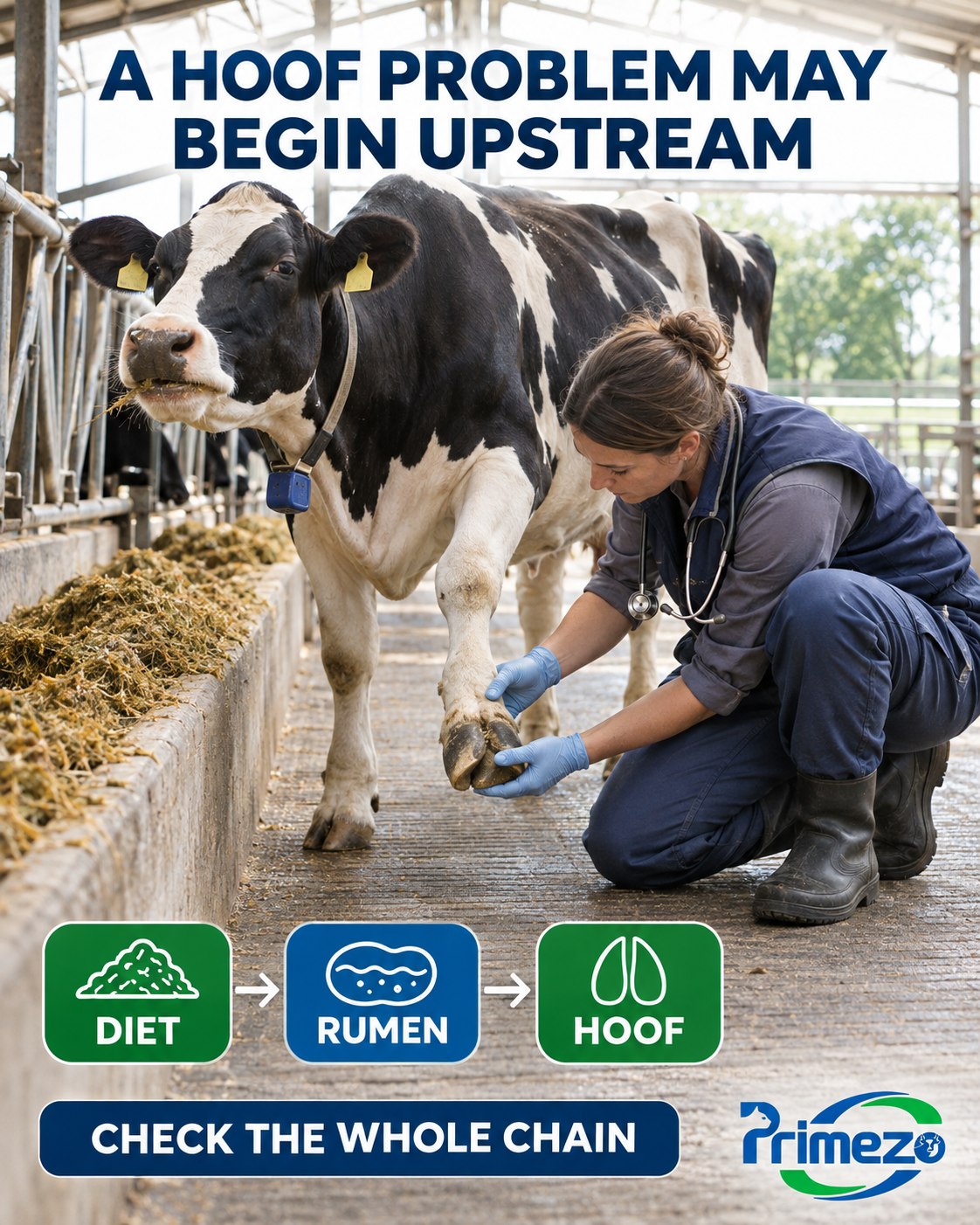
Some hoof problems begin before the hoof shows a visible lesion.
In cattle exposed to high-concentrate diets, subacute ruminal acidosis can be one upstream risk—but it is not the explanation for every hoof problem.
TCVM reads this connection through the functional relationship between the Spleen–Stomach system, the movement of Qi and Blood, and the condition of the limbs.
When feed is not transformed and transported smoothly, TCVM may describe the result as food stagnation. If this continues, Dampness and Heat can accumulate, while the circulation and nourishment reaching the extremities may become less effective.
From this perspective, the hoof is not examined in isolation. The technical team also looks upstream:
- Was the concentrate level increased too quickly?
- Is effective fibre adequate?
- Have rumination, manure consistency or feed intake changed?
- What type of hoof lesion is actually present?
This systems view does not mean that ruminal acidosis causes every case of lameness. Infectious lesions, mechanical injury, flooring, moisture, hoof conformation and trimming remain separate possibilities that require their own assessment.
It does change the order of investigation: check the ration and rumen as well as the hoof.
RumoX is designed as a rumen-management support product, combining buffering minerals, yeast culture, an enzyme and Chinese herbs. Its place is upstream—alongside ration correction, gradual diet adaptation and adequate fibre—not as a treatment for an established hoof lesion.
Local hoof care still matters: correct lesion identification, professional trimming, hygiene and veterinary treatment when indicated.
TCVM’s contribution here is a practical reminder: a visible problem at the end of the system may have part of its origin earlier in the chain.