In TCVM, poor appetite after calving is a Spleen-and-Stomach question—but not always simple Spleen deficiency.
The key is to distinguish weakness from food stagnation and Dampness, then recognise when digestive support is not enough.
Calving consumes Qi and Blood. At the same time, the fresh cow must suddenly transform more feed and fluids to support recovery and milk production. This places the TCVM Spleen and Stomach under considerable pressure.
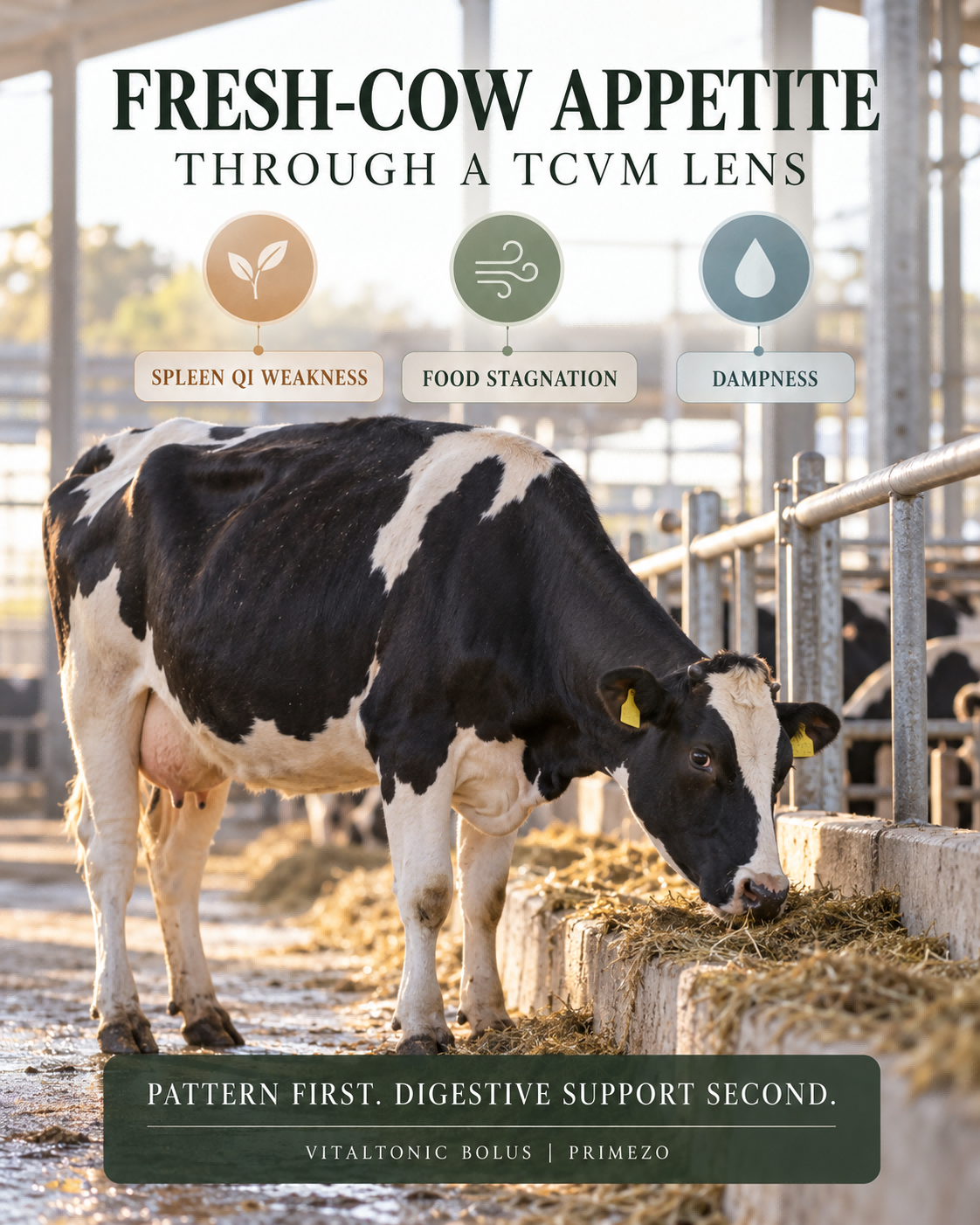
When Spleen Qi is weak, appetite and rumination may be reduced, with fatigue, loose manure and poor strength. The main direction is to support transformation and transportation.
When food stagnation is more prominent, the picture may include abdominal fullness, slow rumination and coarse or poorly digested manure. Here, moving Qi and dispersing accumulated feed become more important than simple tonification.
When Dampness obstructs the middle, appetite may fall together with heaviness, soft manure and a generally dull condition. The formula direction then includes drying or transforming Dampness.
VitalTonic Bolus follows this combined digestive logic. Camphor and menthol awaken the Spleen; rhubarb and tangerine peel move accumulation and Qi; gentian addresses Dampness; liquorice harmonises the formula.
This makes it a digestive-support option when the observed pattern fits. It does not make every fresh-cow appetite loss a digestive problem.
Hyperketonaemia, hypocalcaemia, metritis, mastitis and displaced abomasum can also reduce intake after calving. Fever, fetid discharge, recumbency, a painful udder or marked depression requires prompt veterinary assessment.