Diarrhoea is a symptom—not a TCVM diagnosis.
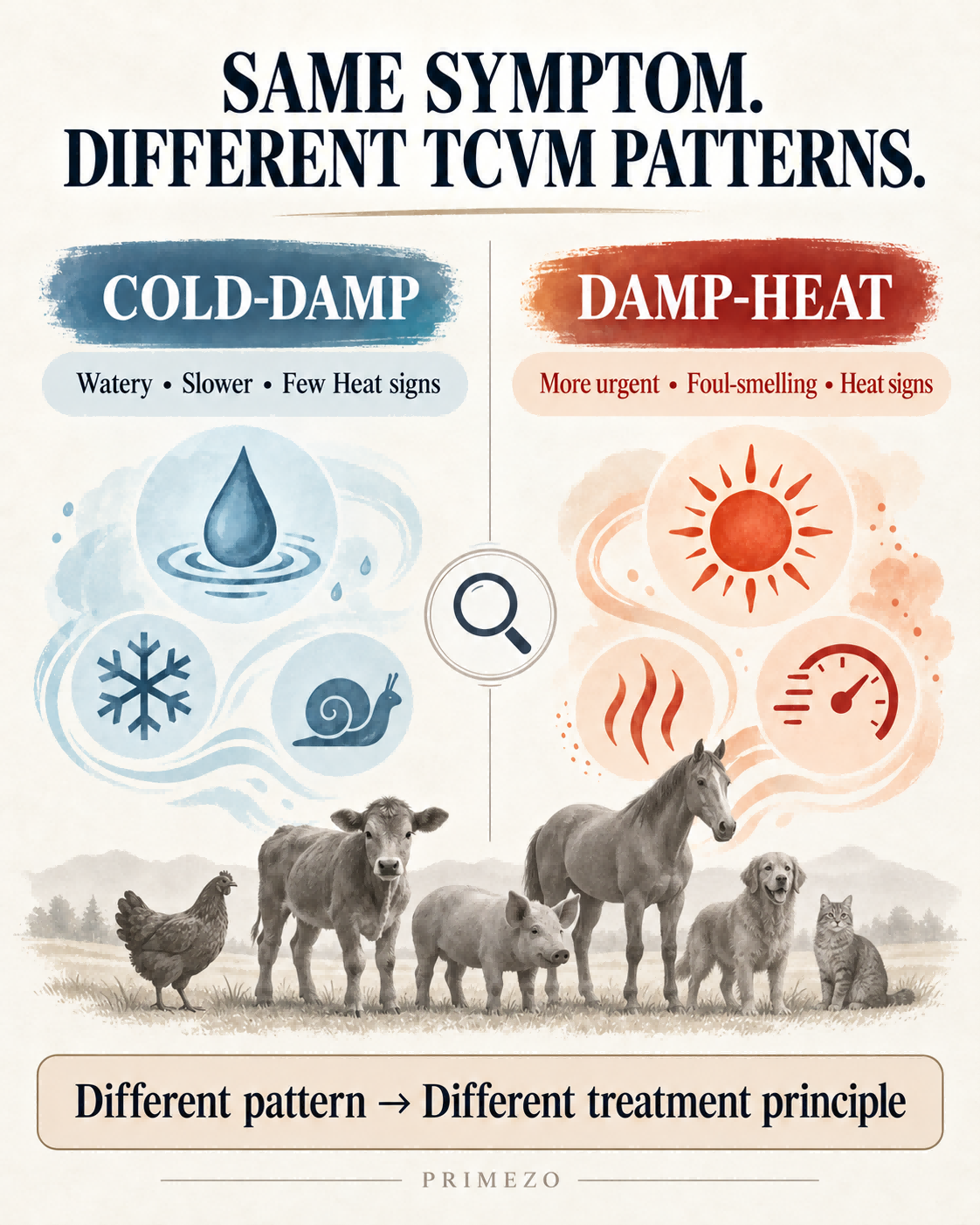
Cold-Damp and Damp-Heat may look similar at first, yet they point to different patterns and different treatment principles.
When an animal or flock develops loose or watery stools, one common response is to look for “the diarrhoea product.” TCVM starts one step earlier: what pattern is producing this symptom?
With Cold-Damp, the overall picture tends to be colder and slower: watery stools, poor appetite, lethargy and few signs of heat. The treatment principle is generally to warm the Middle Jiao and resolve Dampness.
With Damp-Heat, the picture tends to be hotter and more urgent: more frequent or foul-smelling stools, possible straining and other Heat signs. The treatment principle is to clear Heat and resolve Dampness.
But stool appearance alone is not enough. Appetite, energy, thirst, urine, environmental conditions and disease history all belong in the assessment—together with tongue and pulse where appropriate.
This is why two animals with “diarrhoea” may require different TCVM approaches. A warming formula is not automatically suitable for a Heat pattern, just as a strongly cooling approach may not suit Cold or deficiency.
TCVM pattern differentiation does not replace investigation of pathogens, feed or water problems, dehydration or other urgent causes.
Its value is to prevent the symptom name from becoming the diagnosis.
Before choosing a formula, identify the pattern.
Before identifying the pattern, look at the whole animal.